Showing posts with label peace. Show all posts

Wednesday, May 16, 2012

De-escalating Conflict: Dealing with Conflict in Christian Ministry Part 5


The goal within a conflict in a church ministry is not to provide justice through judgment.  Justice, ultimately, is God’s task, to offer the perfect balance of justice and mercy to all men.  Being human, full of human motivation and reactions, our balance between justice and mercy is a bit off-kilter.  Our purpose, again, is to create a place of safety for everyone.  The best way to create safety is not to have a context of crime-and-punishment, but a context of repentance and reconciliation.  This means that the ideal, although not always realized, is to give anyone who is in conflict a place of safety because of their neccessity to have a space apart from the usual actions of the world.  If someone acts in opposition to the rules of the ministry, the main goal is not to punish them for their wrong action, but to convince them that such action is in opposition to everyone’s good.

How to respond to broken rules or conflict:

Patience—First of all, the Spirit fruit of patience is necessary.  Conflict is rarely resolved quickly, and it takes as long as it takes.  If a person is belligerent, then the leader must have “long-suffering” (to use the KJV term) with the one confronting them in order to have the success of bringing peace.  Part of this patience is that we invite them to give us their perspective of what happened.

Approaching Privately— It is best to speak to each person involved in a conflict separately.  Everyone needs to speak their perspective, but in the midst of a conflict, no one is able to hear the other person’s perspective.  Also, if someone is doing something inappropriate, it is best to confront them about it without adding to their shame by confronting them in front of their friends—especially because being in front of their friends might encourage them to act with bravado instead of thinking about the larger perspective.

Listening—In order for us to understand the conflict, we must listen to the reason of the person who is initiating the conflict.  The goal of listening is twofold.  First of all, if we are going to make a right judgment of the situation, we must understand the full context, and that will only be done by listening to whoever is causing the conflict.  Secondly, we need for those who are causing the conflict to feel heard and understood.  Thus, we are not listening as a goal in and of itself, but we are responding to what the other person is saying, and asking appropriate, not leading, questions.  When they feel understood and heard, we can move on to responding.

Objectivity—It is important in a conflict between two participants that the leader not take sides.  The participant must see that the leader is “no respecter of persons”, willing to look at a conflict from both sides.  This means that we need to consider what this conflict means from all parties involved and to speak to each of them from their perspective.  We also need to see that there is almost never a single wrong party in a conflict.  It takes one person to begin a conflict, but it takes more than one to continue it.  It's not our place to place blame, but to create a safe place for everyone.  This means that whomever took part in the conflict must be spoken to, fairly, about their part in perpetuating it.  Also, objectivity means that we cannot take the sides of any of our co-leaders who have perpetuated the conflict.  If any leader—even ourselves!— is involved in aggressive behavior, we must apologize and make no excuses for them because they are a leader.

Find Agreement—One way to quickly defuse a conflict is to find something to agree on with each person you are dealing with.  You can tell someone that you understand their perspective or that you agree that what was done to them was wrong, or just some part of what they said.  To agree with them is to defuse any idea that you are enemies.  Instead, you have made a connection with them and they will be more ready to listen to you.

Humor—Another way to defuse a situation is to use humor in speaking.  Not humor at anyone’s expense, but if you can speak lightly, it makes the situation less heavy and eases the minds of those involved.
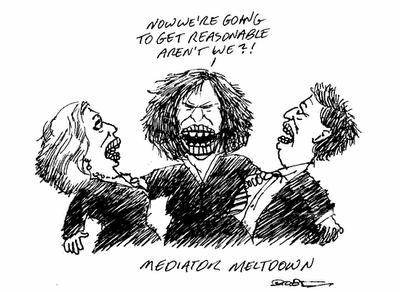
Speaking for Peace—What response we give is based on two perspectives—first of all, their point of view, and also the perspective of the community.  Our response to them needs to recognize their needs and speak to them from their understanding of what happened.  Then we need to bring them into the larger perspective of the community, and how their actions aren’t appropriate for everyone else.  A very few people won’t care about others or their needs, but this is rare.  When we speak to them about this, we need to be gentle, remembering that resolving conflict is a part of the ministry to everyone involved, including those who cause the conflict.

Disciplining— For some smaller rules (such as blasphemy) a gentle (even humorous) reprimand is enough.  But if someone has broken a serious rule—stealing, violence or aggressiveness, or selling drugs for example—then there should be a discipline that is appropriate.  If someone is loudly threatening someone else, then they might be asked to leave for the day.  If a person acts with violence, they might be asked to leave for longer.  The reason for discipline is to communicate to the whole community that everyone’s security is important and to communicate that certain actions cannot be allowed in this safe place.  For someone who knows that they have done something very inappropriate for the church, they might actually appreciate a small amount of discipline as a kind of penance.  Again, just make sure that the discipline is appropriate with the rule broken.

Flesh v. Spirit: Dealing with Conflict in Christian Ministry Part 2


 Please read part 1 first


3.  Not using the world’s methods
"Never pay back evil for evil to anyone. Respect what is right in the sight of all men. If possible, so far as it depends on you, be at peace with all men. Never take your own revenge, beloved, but leave room for the wrath of God, for it is written, "VENGEANCE IS MINE, I WILL REPAY," says the Lord.  "BUT IF YOUR ENEMY IS HUNGRY, FEED HIM, AND IF HE IS THIRSTY, GIVE HIM A DRINK; FOR IN SO DOING YOU WILL HEAP BURNING COALS ON HIS HEAD."  Do not be overcome by evil, but overcome evil with good. " Romans 12:17-21

Paul points out another issue that is associated with Jesus’ command to love all:  that we are not to use the methods of the world against those who do us harm.  It is perfectly natural to want to do harm or violence to those who do harm or violence to us.  As people of Jesus, those guided by the Spirit of God, we are to be led by peace and not harm.  To “do evil” is to harm another, and that is not what we are to do.  Instead of acting with violence or inflicting harm, we are to do good.

 4. Attitudes of the Life in the Spirit
It is interesting that Paul makes two lists in Galatians 5:14-23 that are frequently quoted: the works of the flesh and the gifts of the Spirit.  But a careful examination of the two lists show that, more than anything else, Paul is contrasting those who increase conflict with those who are making peace in community.  I’ll give each list, with just a little bit of editing (check it out yourself in Galatians 5, please), and you can see it yourself:
Introduction (vv.14-15)—“The whole law: Love your neighbor as yourself.  The opposite: biting and devouring each other.”

Works of the flesh (v. 19-21): These are acts that increase conflict and separation
            Enmities—Creating enemies by harming others or accusing
            Strife—Stirring up arguments
            Jealousy—Desiring what another has
            Outbursts of anger—Punishing without control
            Disputes—Irrational arguments
            Dissensions—Separating from others
            Factions—Creating groups in opposition to each other
            Envying—Desiring another’s respect
            Those who practice such things will not inherit the kingdom of God.  To participate in such actions of judgment is to separate oneself from the life of Christ

Fruit of the Spirit (v: 22-23): There is only one result of a life in the Spirit—love.  The rest of the list is describing how love is to be seen in God’s community.
            Love—To think of another’s need before one’s own
            Joy—Rejoicing in the presence of others’
            Peace—Applying the greatest effort to have peaceable relations
            Patience—To not be upset at other’s failings or irritable actions
            Kindness—To see the other person’s need and to assist them to meet it
            Goodness—To act for the other’s benefit
            Faithfulness—To keep one’s promises to others
            Gentleness—To not create drama or judgmentalism
            Self-control—Not being guided by the works of the flesh (above)
            Against such things there are no law.God’s law never opposes love.  We should never apply a law in our congregations that opposes love.

Overall, we can see a distinct philosophy of how we are to deal with the belligerent or violent in our congregations.  First of all, we need to protect our people, but we can exclude no one from that protection, even the one who is being violent.  Secondly, we are to find methods to protect all without causing harm to any.  Thirdly, in order to benefit others, we might have to make sacrifices ourselves, which is part of what we accept if we take on leadership in the church.

 So the natural question is "How can we possibly protect all people when there is violence?  How can we prevent harm from happening?"  The first, most basic principle is that we need to realize that we cannot, ourselves, prevent all harm to those under us.  Everyone, ultimately, is in the hands of God, and there can and will be harm done at times.  For this reason, we must pray for protection for those under our care.
 But there are things we can do, in the midst of being Christ-like that would provide protection, while not causing to harm to anyone.  In the next couple posts are step by step ways to prevent violence in our places of worship and service, where we can practice our love of our neighbor. 

Wednesday, December 8, 2010

Peacemaking Isn't Easy or Obvious

A couple of our folks got a ride from a neighbor, whose name is Mort (name changed). Our folks brought their dog with them, who got out of the truck and ran over to another dog, who was easily four times his size. The two dogs scuffled a bit, and the owners separated them. Mort, however, was disturbed by the sight of a small dog he loved being "attacked" by another, larger dog. Mort is diagnosed with bi-polar disorder and he just snapped. He talked about getting his .44 and shooting the other dog. When the owner of this dog heard this, he began to threaten Mort. And there was much yelling and many threats, even threats to kill people from Mort.

At this point I got involved and tried to talk to Mort about how we don't allow threats on the church property to which he responded, "I can say whatever I want. And if you try to stop me, I'll shoot you too!" I've been threatened before and it didn't mean much to me, but others in the church were very upset and they were ready to gang up on Mort for threatening the pastor. Then Mic, who is often problematic, goes right up to Mort with his hands outstretched and says, "Hey, it's okay, we don't want any trouble. We're not going to hurt you. We just want everything to calm down." Mic was so clearly peaceable and sincere that Mort decided not to make any more threats and just to leave to contact the police. Since Mort was speaking in such a crazy manner, we decided that him contacting the police wasn't much of a threat. Mort drove away. His friends said, "Did Mort just drive away and leave us? He has our bikes in his truck!' I told them that it was better for him to leave right now.

The incident seemed to be over, but Mort returned in just five minutes. I yelled at everyone, "Okay, just back off. I'll deal with it myself, everyone stay away." However, I was thinking that the time Mort was gone was just long enough for him to get a gun and to make his threats real. I didn't want anyone else hurt, and I didn't want anyone else to make the situation worse by trying to threaten Mort. Everyone backed off, and I approached Mort, saying, "Okay, Mort..." But Mort just looked at me with clear, innocent eyes and an open expression on his face and he said, "Hi! How are you doing?" I was surprised for a bit, but then I noticed that he was walking with a cane and a limp when before he was walking with no problem.

I responded, "Hi, Mort. Were you looking for your friends?" He replied, "Why, yes I am. I was supposed to pick them up." I said, "Why don't I go get them for you. They'll be right out." And I collected them and got them back with Mort and he drove them away, completely peacefully.

I am pretty certain that Mort isn't just bi-polar, but also has multiple personality disorder. If he had been approached with threats, he would have reverted back to the personality that was threatening. Instead, a peaceful approach allowed him to remain peaceful, even after his threats.

Our church is unique, but we have some interesting times. Very interesting.

Wednesday, March 10, 2010

Dealing With Violence in a Church Context

As a Christian leader, we often have to deal with security issues, conflict and sometimes belligerence within the church. As a church does serious outreach and attempts to connect with cultures outside the church culture, there are more opportunities for conflict and more possibilities that violence might erupt in or against the church.
Our first impulse is to protect and defend the church community, and this impulse is good. We all want to do our best to protect God’s people and we all hate to see violence in a house of God. When these issues come to the forefront, however, we find that we are often unprepared to deal with conflict, belligerence or violence, not only because we have rarely had to deal with it, but because we have never really thought about such events happening within a church. However, churches need to think about these issues now, the more so as anti-Christian sentiment rises.
It is important for us to consider what we would do as leaders in our church if belligerence or violence occurs in our church, how we can best prevent such situations from occurring, how to de-escalate such situations and what is the best way to deal with these situations as followers of Jesus.

The Foundation of Dealing With Conflict
There are three passages that can offer a foundation for our dealing with conflict as leaders with those whom we have in our churches as guests. These ancient texts—two from Jesus, one from Paul—can help us know to deal with conflict as followers of Jesus, not in the everyday manner.

1. A Different Kind of Leadership
And He said to them, "The kings of the Gentiles lord it over them; and those who have authority over them are called 'Benefactors.' But it is not this way with you, but the one who is the greatest among you must become like the youngest, and the leader like the servant. For who is greater, the one who reclines at the table or the one who serves? Is it not the one who reclines at the table? But I am among you as the one who serves. Luke 22:25-27
First of all, our leadership style is to be like Jesus’ not like the world around us. The world focuses on security or on how leadership can benefit themselves. Jesus says that imitating Him in leadership means that we always are looking to the benefit of those whom we are leading. A leader is not just to prevent anxiety in themselves or others, but to act for the good of those whom they lead, primarily. If Jesus is our servant, willing to accept any humiliation so that we can obtain all the benefits he has to give, even so are we, as church leaders, supposed to allow ourselves to be humiliated, even hurt for the sake of others, as long as it is for their benefit.
This is a difficult concept to accept for oneself, but it is the basis of Christian leadership. Not to do things for one’s own sake, but to sacrifice all for the sake of the other.

2. Benefiting Those Who Hurt Us
But I say to you who hear, love your enemies, do good to those who hate you, bless those who curse you, pray for those who mistreat you. Whoever hits you on the cheek, offer him the other also; and whoever takes away your coat, do not withhold your shirt from him either. Give to everyone who asks of you, and whoever takes away what is yours, do not demand it back. Treat others the same way you want them to treat you. If you love those who love you, what credit is that to you? For even sinners love those who love them. If you do good to those who do good to you, what credit is that to you? For even sinners do the same. If you lend to those from whom you expect to receive, what credit is that to you? Even sinners lend to sinners in order to receive back the same amount. But love your enemies, and do good, and lend, expecting nothing in return; and your reward will be great, and you will be sons of the Most High; for He Himself is kind to ungrateful and evil men. Be merciful, just as your Father is merciful. Luke 6:27-36
Again, in general, dealing with those who harm us, we must act like God and His Son Jesus. An “enemy” is not one whom we declare to be enemies, but those who do us harm, for whatever reason. Jesus is saying that instead of giving harm back to those who harm us, we are to love. Love, simply stated, is acting for the benefit of those in need. So when someone harms us, we are to look at them as someone in need. Someone who is deficient in some way. Someone who could use our help. The question is, what is the best way that we can benefit a person who has done us harm?

Jesus then associates this one characteristic—benefiting those who do us harm—with God’s behavior that we should imitate. And He associates it with a basic characteristic of the Christian life. If all people love, then what greater command does Jesus give to those who follow Him? He commands us to love all those who are the most unlovely, to love without exception. So if someone threatens us, hits us or even shoots us, we are to consider their benefit, as well as the benefit of those whom we are protecting.

3. Not using the world’s methods
Never pay back evil for evil to anyone. Respect what is right in the sight of all men. If possible, so far as it depends on you, be at peace with all men. Never take your own revenge, beloved, but leave room for the wrath of God, for it is written, "VENGEANCE IS MINE, I WILL REPAY," says the Lord. "BUT IF YOUR ENEMY IS HUNGRY, FEED HIM, AND IF HE IS THIRSTY, GIVE HIM A DRINK; FOR IN SO DOING YOU WILL HEAP BURNING COALS ON HIS HEAD." Do not be overcome by evil, but overcome evil with good. Romans 12:17-21
Finally, Paul points out another issue that is associated with Jesus’ command to love all: that we are not to use the methods of the world against those who do us harm. It is perfectly natural to want to do harm or violence to those who do us harm or violence. As people of Jesus, those guided by the Spirit of God, we are to be led by peace and not harm. To “do evil” is to harm another, and that is not what we are to do. Instead of acting with violence, inflicting harm, we are to do good.

Overall, we can see a distinct philosophy of how we are to deal with the belligerent or violent in our congregations. First of all, we need to protect our people, but we can exclude no one from that protection, even the one who is being violent. Secondly, we are to find methods to protect all without causing harm to any. Thirdly, in order to benefit others, we might have to make sacrifices ourselves, which is part of what we accept if we take on leadership in the church.