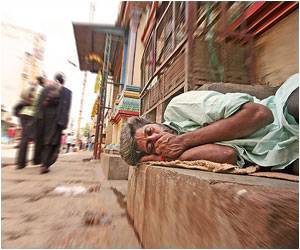
It is said that the homeless
are just like “us”, by which is meant “normal, middle class people”. That is only partly true. The homeless start out just like us, but they
are re-trained to live lives of perpetual chronic stress. While the stress level of the homeless should
be obvious to everyone, it isn’t necessarily seriously considered.
A person finds themselves
homeless, a place they never thought they would be in. Perhaps, up to this point, they have even
looked down on homeless people, seeing them as those who failed. Now they are there themselves, and they do
not need anyone to tell them that they need to immediately get off the
streets. So they call their family, call
their friends, they contact the government, they go to shelters—and they find
that there isn’t any help for them. Now
they are the ones who have failed, they are failures in the society they grew
up in. For some, this feeling of social
inadequacy is overcome, but for many it continues for the rest of the time they
are on the street.
Sleep
is almost impossible, especially at first.
Sleeping outside is strange, even if it is warm, but often it is not
warm. The wind on one’s face, the
stirring of anything—person, animal, branch blown by the wind—keeps you awake,
or wakes you many times in the night.
Later on, sleep is also difficult, perhaps because one’s camp isn’t
adequate for the rain, or because of fear of the many other people you share a
single room with in the shelter.
Once
a person is homeless for a while, they realize just how vulnerable they
are. They hear stories about people who
are attacked in the middle of the night, or about police disturbing you or
telling you to move early in the morning, often with their dogs and Taser
guns. The fact that you can be stopped
and often are by the police just for “looking” homeless, or ticketed if you are
found in a camp is enough to make you nervous.
The strange looks people give you, the complaints of shoppers if you
stop in front of a store to rest, managers or church workers who yell at you
for just trying to survive.
And
the walking! Some cities have all the
services in one location, which means you have to deal with all the crazy
people in one place. But in most cities,
many churches or agencies offer different services in different places. This means miles of walking just to get from
one meal to another. Clothes are in one place,
food in another, shelter in another.

After
a person has been homeless for a while, the amount of alcohol they drink
increases. It helps reduce the stress
temporarily, and a lot of alcohol means that the stress just disappears after a
while, leaving one in a blissful state.
Of course, in the end it doesn’t reduce stress. First of all, alcohol is a depressant, so
after the bliss is over, it leaves one morose, or perhaps irrationally
angry. This not only causes stress for
the individual, but for all those around them.
But being without the alcohol doesn’t help either, because withdrawals
makes one irritable and if one has had a lot of alcohol over a long period of
time, withdrawals can even kill you.
The
other homeless can also be a source of stress.
They are just as stressed, just as desperate as you are yourself. But you can’t leave them, because you all use
the same services, the same resources.
The homeless are stuck with each other.
But they can’t trust each other, not really. There may be individuals who can be trusted,
but as a group they must be seen as potential thieves, potential violent
criminals. Few of them actually
are—fewer than in the housed population—but because you are so vulnerable, and
the few items you carry with you are all necessary, you have to ward against
them all.
Some
of the homeless tell themselves that all the homeless aren’t to be trusted as a
group. But since the one speaking is
part of that group, that increases one’s anxiety about oneself. If I am a part of an untrustworthy group,
what does that make me?
Think about this lifestyle,
think about this mindset. How long could
you stand it? Certainly you would try to
get out, but what if you can’t? How long
could you endure before you started cracking?
A month? Six? What about people who have had to endure this
living for years? Some aspects of their
lives they would have gotten used to.
But the stress is always there.
Always. No matter what you do to
try to deal with it, it is always an issue.