Wednesday, May 16, 2012

How To Increase Conflict: Dealing with Conflict in Christian Ministry, Part 4


If a conflict does occur, that either breaks or leads to the breaking one of the rules, then a leader should be involved.  How the leader is involved will determine whether the conflict will increase or decrease.  If a conflict escalates, then it will become a fire that will spread, and the initial conflict will become a continuing problem, over a long period of time, among more and more people.

Expecting Unearned Respect/Obedience—Everyone has different ideas of how leadership should behave, and how to behave toward leadership.  In some cultures, authority is to be respected without question.  However, in other cultures, authority is only to be granted respect if they are deserving of that respect.  This does not mean that the non-authoritative cultures disrespect authority, they just expect those in authority to earn their respect, through peacemaking.  To act as if respect is to be deserved, not earned, is to set up a context in which a conflict of values is already present.
Escalating responses: “Don’t talk to me that way!  Do you know who I am?”

Undeserved judgment—If a person feels unfairly judged, then conflict will be seriously increased.  Not all judgments are considered unfair.  If a person gets into a fight on church property and is asked to leave, they will probably accept the discipline.  But if their side is not heard, or if they are given a discipline that is excessive to their action (permanent exclusion for a single event, for example), then the conflict will rapidly increase.  Judging the wrong person, or for the wrong motives or with an excessive punishment, will encourage a person to act out against how they are being treated, because there is no reason not to.  To avoid this situation, a person should be listened to carefully, and the viewpoint of the leader should be explained carefully, especially the reason for any discipline.
Escalating responses: “You obviously don’t know how to treat others with respect.”

Excessive demands—If a ministry has too many policies or requirements on their participants, mistakes will be made, for everyone is human.  The participants may not understand which policies are more significant than others, and lines may be crossed.  It is a mistake to take every bad situation in a ministry as an excuse for a new policy.  Too many rules, and soon it will be impossible not to break a rule.  Then there will be conflict at any correction, because the ministry will feel constricting.  Along these lines, having an extreme punishment for an offense will make the whole place feel insecure.  One ministry I know shuts the whole program down if one person gets out of line. So everyone is punished for the actions of one.
Escalating response: “Because you broke the rule of talking too loud, you’ll be excluded from the program for 30 days.”

Misdirected anger—Anger isn’t necessarily a cause of conflict.  If anger is displayed against a common oppositional factor—such as an unjust system—then anger can be useful in building a bridge between ourselves and the one in conflict.  However, if the leader displays anger against the one in conflict, then human nature demands that anger be reciprocated.  The improper response to anger is anger, and this creates or increases enmity.  As Christian leaders, we need to remember that the true enemy is not the person before us, but the spiritual forces of darkness that are causing strife.
Escalating response—“Get out of here, just don’t have anything to do with me!”

Disrespect—The very worst action to take is to disrespect any participant in the ministry.  To speak disrespectfully to one in the church ministry is to shame them before others, and to make a judgment against them.  Disrespectful speech include insults, snap judgments, or disregarding another’s concerns.
Escalating response: “What an idiot!”

Violence—The one thing that should never be done by church leadership is violence or threats against a participant.  If this is activity that we do not want the participants to engage in, then the same rule must apply to the leaders.  If violent action must be done for safety’s sake, then let the police be called (but first see the section on the police, part 6).

Avoiding all of these conflict escalators is especially difficult if these are the same attitudes and actions being used against the leaders.  As mentioned above, the normal human reaction is to respond in kind.  This is one of the joys of Christian leadership: that when despised, we will not despise in kind; that when persecuted, we will not persecute back.  It seems impossible to endure this, at times—to be more than any human can handle.  This is one of the reasons that Christian leadership is not for everyone.  For the Christian leader must expect to be confronted wrongly, but to respond in peace and gentleness.  This is difficult, but through dependence on the Holy Spirit, not impossible. (James 3:18; Galatians 5:19-26).

Creating a Context of Safety: Dealing with Conflict in Christian Ministry Part 3


In whatever context we are in, whether worship, service or benevolence, we need to let it be known that this is a place of safety for everyone.  That our church is going to be a place in which everyone has the opportunity to be safe, which means that no one will be allowed to participate in actions that harm others, whether a church leader, a church member, a guest, a police officer or anyone else.  All are to follow the same rules of safety.

In that, the church needs to adopt a set of simple rules that will allow the most basic level of safety and respect to others.  Anawim—our church of the homeless and the mentally ill— and their programs have adopted five simple rules that everyone can remember and respect, especially in a church setting.  Our rules are these:

No violence or intimidation
This includes not only the acting out of harm, but the verbal or non-verbal threat of harm.

No illegal drugs or alcohol on the premises
This allows those who are inebriated to participate in services, as long as they abide by the other rules.  But the church is not to be a place in which one becomes inebriated.

No stealing or borrowing other’s possessions without permission

No sexual harassment
This allows all members of the community to feel safe from unwelcome sexual advances, whether verbal or non verbal.

No blasphemy
This is out of respect of the Owner of the property as well as the community that manages it.  This is not a rule against low brow language, but rather using God’s name in a demeaning way.

No harm to neighbors
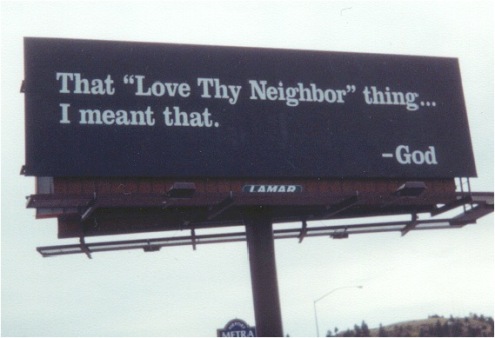
As a church, our goal is to “love our neighbors” both in our church and outside of it. We need to ask those who come to respect those who live around our church.  If for no other reason, it is so that the ministry might continue, because neighbors can cause difficulties for ministries to the poor.

If the rules are simple, then they can be remembered.  Also, the rules should make sense to people that they would be imposed in any of God’s sanctuaries, not special to that facility.

In Anawim, we asked the community we were serving, the homeless, to help us establish consequences for these actions that are fair and preventative.  For instance, some who does an act of violence is asked to leave for a week.  One who acts in an intimidating way (arguing in someone's face, for instance) is asked to go on their own to cool down or to leave for the day so they can cool down.  

Context of Trust
Finally, to build a context of safety in the building, there must be trust built between the leaders of every service and those who are participating in it.  This means that the leaders should attempt to get to know all the regulars of the service, so that if the rules need be enforced, there is a relationship on which one can build such enforcement.  If there is a place of communication and trust between the leadership and the participants, when conflict does occur, then the leadership will know immediately and will be called upon to help deal with it.  If no trust is built, then the leadership will be the last place where those involved in or observing conflict will go to, because they fear how the leadership will deal with conflict.

It helps to build trust if some of the leaders are among the community that the church is serving.  There needs to be a break down between the served and the servers.  This communicates that the church looks at ability to give people work, not at race, social class or other superficial standards.

We need to remember that trust isn't built in a day.  To create a ministry that is trusted by the community it is serving takes a long time of faithfulness and respect given to the community.  Be patient with those who might mistrust your motives.


To be continued...

Flesh v. Spirit: Dealing with Conflict in Christian Ministry Part 2


 Please read part 1 first


3.  Not using the world’s methods
"Never pay back evil for evil to anyone. Respect what is right in the sight of all men. If possible, so far as it depends on you, be at peace with all men. Never take your own revenge, beloved, but leave room for the wrath of God, for it is written, "VENGEANCE IS MINE, I WILL REPAY," says the Lord.  "BUT IF YOUR ENEMY IS HUNGRY, FEED HIM, AND IF HE IS THIRSTY, GIVE HIM A DRINK; FOR IN SO DOING YOU WILL HEAP BURNING COALS ON HIS HEAD."  Do not be overcome by evil, but overcome evil with good. " Romans 12:17-21

Paul points out another issue that is associated with Jesus’ command to love all:  that we are not to use the methods of the world against those who do us harm.  It is perfectly natural to want to do harm or violence to those who do harm or violence to us.  As people of Jesus, those guided by the Spirit of God, we are to be led by peace and not harm.  To “do evil” is to harm another, and that is not what we are to do.  Instead of acting with violence or inflicting harm, we are to do good.

 4. Attitudes of the Life in the Spirit
It is interesting that Paul makes two lists in Galatians 5:14-23 that are frequently quoted: the works of the flesh and the gifts of the Spirit.  But a careful examination of the two lists show that, more than anything else, Paul is contrasting those who increase conflict with those who are making peace in community.  I’ll give each list, with just a little bit of editing (check it out yourself in Galatians 5, please), and you can see it yourself:
Introduction (vv.14-15)—“The whole law: Love your neighbor as yourself.  The opposite: biting and devouring each other.”

Works of the flesh (v. 19-21): These are acts that increase conflict and separation
            Enmities—Creating enemies by harming others or accusing
            Strife—Stirring up arguments
            Jealousy—Desiring what another has
            Outbursts of anger—Punishing without control
            Disputes—Irrational arguments
            Dissensions—Separating from others
            Factions—Creating groups in opposition to each other
            Envying—Desiring another’s respect
            Those who practice such things will not inherit the kingdom of God.  To participate in such actions of judgment is to separate oneself from the life of Christ

Fruit of the Spirit (v: 22-23): There is only one result of a life in the Spirit—love.  The rest of the list is describing how love is to be seen in God’s community.
            Love—To think of another’s need before one’s own
            Joy—Rejoicing in the presence of others’
            Peace—Applying the greatest effort to have peaceable relations
            Patience—To not be upset at other’s failings or irritable actions
            Kindness—To see the other person’s need and to assist them to meet it
            Goodness—To act for the other’s benefit
            Faithfulness—To keep one’s promises to others
            Gentleness—To not create drama or judgmentalism
            Self-control—Not being guided by the works of the flesh (above)
            Against such things there are no law.God’s law never opposes love.  We should never apply a law in our congregations that opposes love.

Overall, we can see a distinct philosophy of how we are to deal with the belligerent or violent in our congregations.  First of all, we need to protect our people, but we can exclude no one from that protection, even the one who is being violent.  Secondly, we are to find methods to protect all without causing harm to any.  Thirdly, in order to benefit others, we might have to make sacrifices ourselves, which is part of what we accept if we take on leadership in the church.

 So the natural question is "How can we possibly protect all people when there is violence?  How can we prevent harm from happening?"  The first, most basic principle is that we need to realize that we cannot, ourselves, prevent all harm to those under us.  Everyone, ultimately, is in the hands of God, and there can and will be harm done at times.  For this reason, we must pray for protection for those under our care.
 But there are things we can do, in the midst of being Christ-like that would provide protection, while not causing to harm to anyone.  In the next couple posts are step by step ways to prevent violence in our places of worship and service, where we can practice our love of our neighbor. 

A Different Kind of Leadership: Dealing with Conflict in Christian Ministry Part 1 Part 1


We're all brothers, right?

As a Christian leader, we often have to deal with security issues, conflict and sometimes belligerence within the church.  As a church does serious outreach and attempts to connect with cultures outside of the church culture, there are often more opportunities for conflict and more possibilities that violence might erupt in or against the church.

            Our first impulse is to protect and defend the church community, and this impulse is good.  We all want to do our best to protect God’s people and we all hate to see violence in a house of God.  When these issues come to the forefront, we often find that we're unprepared to deal with the conflict, belligerence or violence, not only because we've rarely had to deal with it, but because we've never really thought about such events happening within a church.  However, churches need to think about these issues now, the more so as anti-Christian sentiment rises.

            It is important for us to consider what we would do as church leaders if belligerence or violence occurs in our church, how we can best prevent such situations from occurring, how to de-escalate such situations and what is the best way to deal with these situations as followers of Jesus.

I. The Foundation of Dealing With Conflict
There are three passages that can offer us a foundation, as leaders, for our dealing with the conflict  of those whom we have in our churches as guests.  These ancient texts—two from Jesus and one from Paul—can help us learn how to deal with conflict as followers of Jesus, rather than in the everyday manner.

Letting another succeed
 1.  A Different Kind of Leadership
And He said to them, "The kings of the Gentiles lord it over them; and those who have authority over them are called 'Benefactors.'  But it is not this way with you, but the one who is the greatest among you must become like the youngest, and the leader like the servant. For who is greater, the one who reclines at the table or the one who serves? Is it not the one who reclines at the table? But I am among you as the one who serves."  Luke 22:25-27

First of all, our leadership style is to be like Jesus’ and not like the world around us.  The world focuses on security or on how leadership can benefit oneself.  Jesus says that imitating Him in leadership means that we are always looking to the benefit of those whom we are leading.  A leader is not meant to just prevent anxiety in themselves or others, but to primarily act for the good of those whom they lead.  If Jesus is our servant, willing to accept any humiliation so that we can obtain all the benefits He has to give, even so are we, as church leaders, supposed to allow ourselves to be humiliated, even hurt for the sake of others, as long as it is for their benefit.

This is a difficult concept to accept for oneself, but it is the basis of Christian leadership.  Not to do things for one’s own sake, but to sacrifice all for the sake of the other.

2.  Benefiting Those Who Hurt Us
"But I say to you who hear, love your enemies, do good to those who hate you, bless those who curse you, pray for those who mistreat you.  Whoever hits you on the cheek, offer him the other also; and whoever takes away your coat, do not withhold your shirt from him either. Give to everyone who asks of you, and whoever takes away what is yours, do not demand it back. Treat others the same way you want them to treat you. If you love those who love you, what credit is that to you? For even sinners love those who love them. If you do good to those who do good to you, what credit is that to you? For even sinners do the same. If you lend to those from whom you expect to receive, what credit is that to you? Even sinners lend to sinners in order to receive back the same amount. But love your enemies, and do good, and lend, expecting nothing in return; and your reward will be great, and you will be sons of the Most High; for He Himself is kind to ungrateful and evil men.  Be merciful, just as your Father is merciful."   Luke 6:27-36

Again, in general, dealing with those who harm us, we must act like God and His Son Jesus.  An “enemy” is not one whom we declare to be enemies, but those who do us harm, for whatever reason.  Jesus is saying that instead of giving harm back to those who harm us, we are to love.  Love, simply stated, is acting for the benefit of those in need.  So when someone harms us, we are to look at them as someone in need.  Someone who is deficient in some way.  Someone who could use our help.  The question is, what is the best way that we can benefit a person who has done us harm?

            Jesus then associates this one characteristic—benefiting those who do us harm—with God’s behavior that we should imitate.  And He associates it with a basic characteristic of the Christian life, Love. If all people love, then what greater command does Jesus give to those who follow Him?  He commands us to love all those who are the most unlovely, to love without exception.  So if someone threatens us, hits us or even shoots us, we are to consider their benefit, as well as the benefit of those whom we are protecting.

To be continued...

Wednesday, May 2, 2012

Culture Clash

I took the opportunity last night to be yelled at for an hour and a half.   I was told that I was abusing some, enabling others and that I ruined a neighborhood.  For the most part, I couldn't deny it.  I just sat and listened.

For the most of 15 years we have had a ministry to the homeless on a corridor in suburban Gresham.  We provide some food, showers, and a place for the homeless to get out of neighborhoods and businesses.  Some of the homeless were already in the neighborhood, but many of the homeless wouldn't be in that particular place unless we were there, assisting them.

Mind you, the day shelter program works.  We provide a place of peace and opportunities for people to change their lives.  Many of the folks coming to our day shelter have been doing work, gotten housing, gotten jobs, gotten in treatment, and become full time employed.  Mind you, that isn't just from our program by itself, but we are the first step up, the place where people learn to live in community, the place where people find out about the basic helps, the place where they can get the basic needs to sleep that night, the place where they can rest from the stress of their lives in order to have enough brain cells to figure out what they can do with their lives.

Of course, not everyone who wants a shower or clothes or a bite to eat are ready to change.  Most people aren't.  And some people, a few, have pretty anti-social behavior.  They yell and scream.  Many people drink in public (of course, they don't have anywhere else to drink).  And, of course, this impacts the neighborhood.

I invited the neighborhood to come and talk to us about any issues they had, and six people did.  Boy, they were angry.  And they don't like our ministry.  They said that these people just needed jobs and we asked them if they could get jobs for them.  Well, sure, they said, if they don't have a record and have ID and have some experience.  But the prevailing attitude of the meeting is that the homeless are bad, dangerous people and if they can't be out of the neighborhood, they need to be unseen, unheard.

According to these people, there is an impact on the neighborhood, although minimal.  There is a park bench on which our folks drink... that's not good.  In the house next to our church, the couple who lives there are often woke up early on Saturday morning by our people waiting for us to open.  That has to change.  Sometimes there are people on the property when we are closed, which makes the neighbors nervous.  And some of our people go through the recycle bins on trash day.

But they weren't angry just at these true problems.  They were upset that these folks were not acting "appropriate" in church.  (One person said in our sanctuary, "I wouldn't let people speak such shit in the Lord's house."  We all laughed.)They were angry that these people had no work to do, were "loitering".  They were angry that our program was "enabling" them to live an "anti-social" lifestyle.  They were angry that we didn't have enough rules. They felt that these people should just tow the line.  Their line.

They didn't understand that the homeless has a different line.  A different culture.  A different point of view.  I am not saying that the homeless culture is an always successful one, but it works when you are forced on the street.  And the middle class needs to remember that it is their culture that forces homelessness as an option. One neighbor talked about his son, how he wouldn't "follow the rules" and so was kicked out.  "And I don't care" he said, "if he's sleeping in a car.  He can't come home."

One person in the group said it clearly, "I hate to sound like a cliche, but I just don't want it in my neighborhood."  Meaning the homeless.

It is not my job to tell these neighbors to accept the homeless culture.  They have a right to their culture, their way of life. They have built it, and they can have it.  The homeless also have a right to their way of life as long as it doesn't interfere with anyone else.  I can't tell them not to live that way.

What neither the homeless nor the neighbors understand is that it is our task, the church's task, to help both sides accept the other.  To bring peace and cooperation to the neighborhood.  To help all in need, no matter who they are, and to create community of love.  It is almost impossible to bring love amidst warring factions.   But it can be done.

The first step is listening to the needs and demands of each side.  The second step is to build trust on both sides.  Eventually, for there to be peace, we must have relationship between the two camps.  I hope we will be given a chance to do that.

I hope I don't die of a heart attack before that happens.

Thursday, April 5, 2012

Should Everyone Be a Blogger?


They didn’t have much trouble
teaching the ape to write poems:
first they strapped him into the chair,
then tied the pencil around his hand
(the paper had already been nailed down).
Then Dr. Bluespire leaned over his shoulder
and whispered into his ear:
“You look like a god sitting there.
Why don’t you try writing something?”
-James Tate  (copyright 1970)

Of course the ape had to be strapped down.  He had no reason to write.  He was not improved by it, because he was already good, already a complete being just by being an ape.  We who write see the writing as part of what makes us a benefit to the universe, as if the universe needed self-reflection, or an observer who would permanently etch their point of view for all time. 

There is nothing wrong with writing.  Evil doesn’t exist within the power of education, or even of replicating that education in others who have that gift or inclination.  I am proud of my daughters who have been writing novels and poetry in their spare time.  I am proud of my son who programs games and creates characters through word and design.  But why would I want to put that burden on an ostrich, a horse, an eagle?  They each have their own nobility, their own glory.  Why diminish that glory by imposing upon them that which they are not gifted for?  Their talents are already so great, why force them to do that which they were not born to do?

Why?  Because we find it difficult to see glory in that which is not reflected in ourselves.  We demand our children be intelligent in the way we are intelligent, to be gifted in the way we are gifted, to see not what we see, but how we see.   Our fellow countrymen and women are only properly citizens if they are literate in the way we are literate, and we expect them to be so.  They must know English as we know it, they must budget as we budget, they must live as we live, and have the benefits that we consider benefits.  If our children, our countrymen, our family does not experience life as we experience it, they are poor, they are pitiful.  And we feel we must do something to improve their lot, or we must blame  them for not achieving the best.  Our best.

So we limit their options.  We establish societal standards that make it illegal to live without electricity, even though our ancestors all lived without it.  We base our functionality on full literacy, although having a society with a majority of literate people is a very recent historical phenomenon.  We insist that most people, especially the poor, live in cities, even though our bodies and biological rhythms are based on agricultural work.   Again, there is nothing wrong with living according to these most recent standards.  But to create a society where there is no place for the subsistence farmer, for the functionally illiterate, for the socially awkward is to deny our heritage, to deny the citizens we have.

Education is essential.  Everyone should be given an opportunity to achieve all that they can.  But if they cannot achieve sustenance in this world, why should they be treated as outcasts, as non-citizens?  The true crime is to take the poor and call them lazy or crooked, when they have done nothing wrong.  The policies and economics of our world are shutting out people who aren’t able to be educated in the traditional sense, whose intelligence doesn’t lie in the classic reading/math categories.

I want to make it clear, I am not comparing the poor to apes.  The poor are human, with their own talents and gifts and secret powers and work to do for humanity at large.  They are no less, no more than any other human being.   But many of them have gifts that aren’t as easily accepted in the society we are building.  Why not?  Why are they excluded?

What if we saw them for who they were instead of how they are not like us?  What if we found a place for those who couldn’t work forty hours a week?  What if we created contexts for people to live and even thrive, even though they don’t meet the requirements of our “new world order” of a society?  Who would it harm? 

What if we actually had a society in which everyone had a place?  Where no one was excluded?  Would it be so bad?

Thursday, March 15, 2012

How To Respond To Beggars


It can be a struggle to know what to do for folks who approach us for money, or who are holding a sign asking for support. We want to help, but we often don’t know how. If we give them money, will they use it for drugs or alcohol? By giving them something, are we perpetuating their cycle of poverty? Is it better to give to an organization?

As the debate rages on, and we give neither to the beggar nor an organization that helps them, the one flying the sign is there on the street, in need. The rumors are not true—beggars do not make an excellent salary. A really good day might gain them thirty dollars. But normally, they might get ten or less.

As for alcohol and drugs, yes, some will spend the money they receive to get drunk. Others are hoping to get a place to sleep for the night. Others are just wanting to get a decent meal.

One thing we need to keep in mind, however, that a person begging is desperate for something. No one stands with a sign or approaches people for money unless they are desperate. It isn’t exactly the best employment opportunity—one only takes it if other options are lacking. To beg is to face being ignored, disrespected and openly insulted. No one would take this as their job unless they are at the bottom of their options.

So what do we do? The choice that I have made is to carry around with me items that would assist the beggars, but would not be used to destroy themselves. Below, I have listed a few items that would be used to help a beggar, without any detriment. Some of these items we might have in our cupboards or closets. I just carry these items near my driver’s seat, so I am ready to pass them out to anyone holding a sign as I’m passing by. In this way, I am able to show Christ’s mercy and love without any harm.

By the way, if you would like to hand out tracts to folks, or a list of meals in the area, they are only appreciated if a practical gift accompanies the paper. If you just give paper, that’s a good way to encourage littering. But if you display Christ’s love, they might assume that your offer of the gospel is sincere and not just someone else disrespecting them.

What you can give: 
Socks
A friendly chat about the weather
Breakfast bars or energy bars
A hamburger
A coffee
A gift card to a local coffee shop
A gift card to a grocery store (some stores have gifts cards in which you cannot buy alcohol with them)
An apple
A sandwich (Food prepared at home might be refused by some, because they are concerned that someone might harm them)
Foot or hand warmers (you can buy a pack of six for pretty cheap, and they keep you warm for six hours)
A small blanket (not too hard to carry with them)
A kind word (Very rare in their business, and VERY welcome)
An individual juice
A bagged lunch
Individual chips

Besides this, the other thing I attempt to do is to talk to the person to find out who they are and what their specific needs are. Some folks are taken aback by this, but others really appreciate being treated as a human being and not just a post holding a sign (or a monster).

Be Compassionately Wise